
By Emily Parrow
October 26, 2026
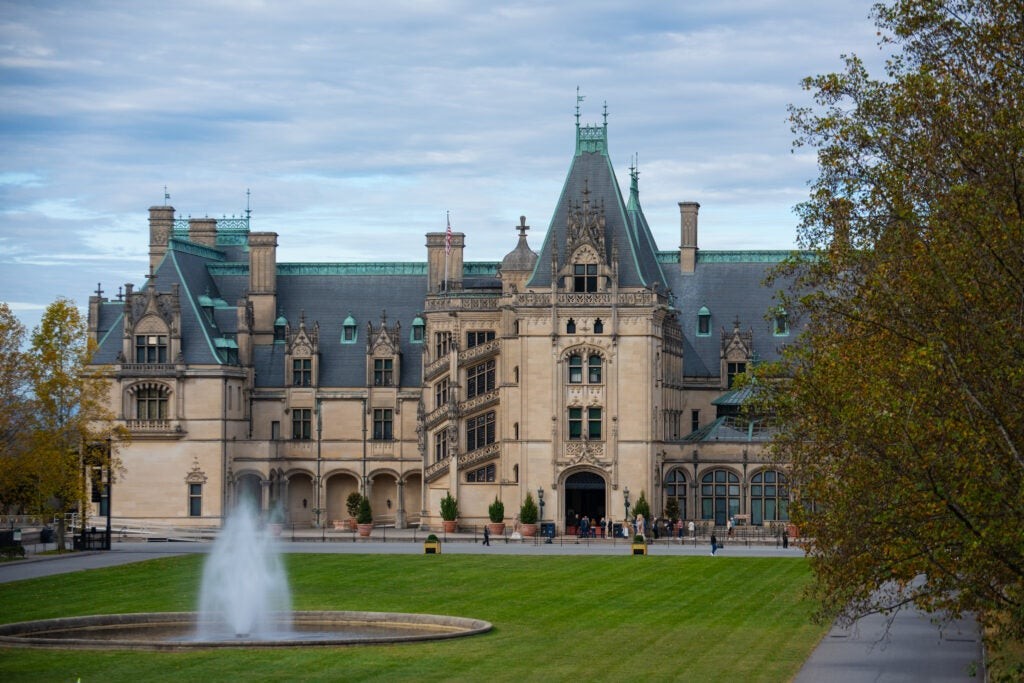
In the fifth installment of “Field Notes: Public History in the GAPE,” Curator of Interpretation Lauren Henry discusses Biltmore, the historic estate of George W. Vanderbilt and the largest privately-owned home in America. Located in the mountains of Asheville, North Carolina, the estate is 8,000 acres in size, including 75 acres of gardens, an expansive trail network, and numerous shopping, lodging, and dining options that collectively host more than 1.4 million visitors annually. It is a major economic driver for Western North Carolina.
As Henry explains, guests are invited to experience Biltmore’s aesthetic marvels and rich history in many ways. Reflecting on the connection between tourism and history, she demonstrates her work’s potential to spark an enduring, broader interest in the GAPE among Biltmore’s visitors.
Be sure to follow Biltmore on Facebook and Instagram @biltmoreestate.
Tell me a bit about your institution’s scope and focus. What makes it unique?
Biltmore is America’s largest privately-owned home and is a remarkably intact relic of the Gilded Age. It differs from other historic sites or museums as a for-profit company and cultural destination owned and operated by the descendants of our founder, George W. Vanderbilt. Working within this unique model of private preservation, we aim to uphold the highest standards for our National Historic Landmark while generating income through revenue streams such as our tickets, e-commerce, onsite lodging, and wine company. Biltmore House is our core experience, but we have layered historical interpretation into as many of our operations and products as we can.
Generally, our interpretive focus includes the Vanderbilt family who lived here, as well as the historic interiors and collections, architecture, staff and servants, agriculture, forestry, and much more. Our period of interpretation was for many years limited to George Vanderbilt’s residence here (1895-1914), though we have broadened that in both directions in recent years, addressing more about previous landowners and the management of the estate through the present.
How does your institution interpret GAPE history? What tools are you using?
Guests who visit Biltmore House are provided with an audio guide as our primary form of interpretation, last revised in 2024. It has been our directive to represent Biltmore House as a home, not a museum, so we have limited didactic information. Outside of the house, we weave stories into many different areas of the guest experience, from retail products to interpretive signage and both temporary and permanent exhibits. I lead the development of guided tours, which are one of my favorite ways that guests can dig deeper into our stories, engage with our interpretive hosts, and see spaces that are not accessible on the regular route. This spring, we launched Luminere, a projection mapping and garden illumination experience that provides a new way to tell our stories that is more visual and experiential. As that progresses, we are eager to see how guests respond to that format as a way to share our narratives.
Tell me about your current position. What does a typical day look like for you?
As Curator of Interpretation, my work is a fun combination of conducting research, sharing stories, and enhancing the guest experience. While some days I am actively developing a new interpretive product, other days I am thinking about how to remove barriers and make the Biltmore House experience more accessible, or maybe sourcing historic faux food for the kitchens. The variety is what we all enjoy in our work here. I also spend time exploring our archives and external repositories to learn more about our history and individual figures. Researching Biltmore’s domestic staff is one of my favorite topics to dig into, especially when I’m able to make connections with living descendants. In my role, I also work closely with teams across The Biltmore Company (of more than 2,000 employees) to help educate and engage them with our stories.
Can you describe a noteworthy finding, exciting research rabbit trail, encouraging public response, or other insight that occurred through your work?
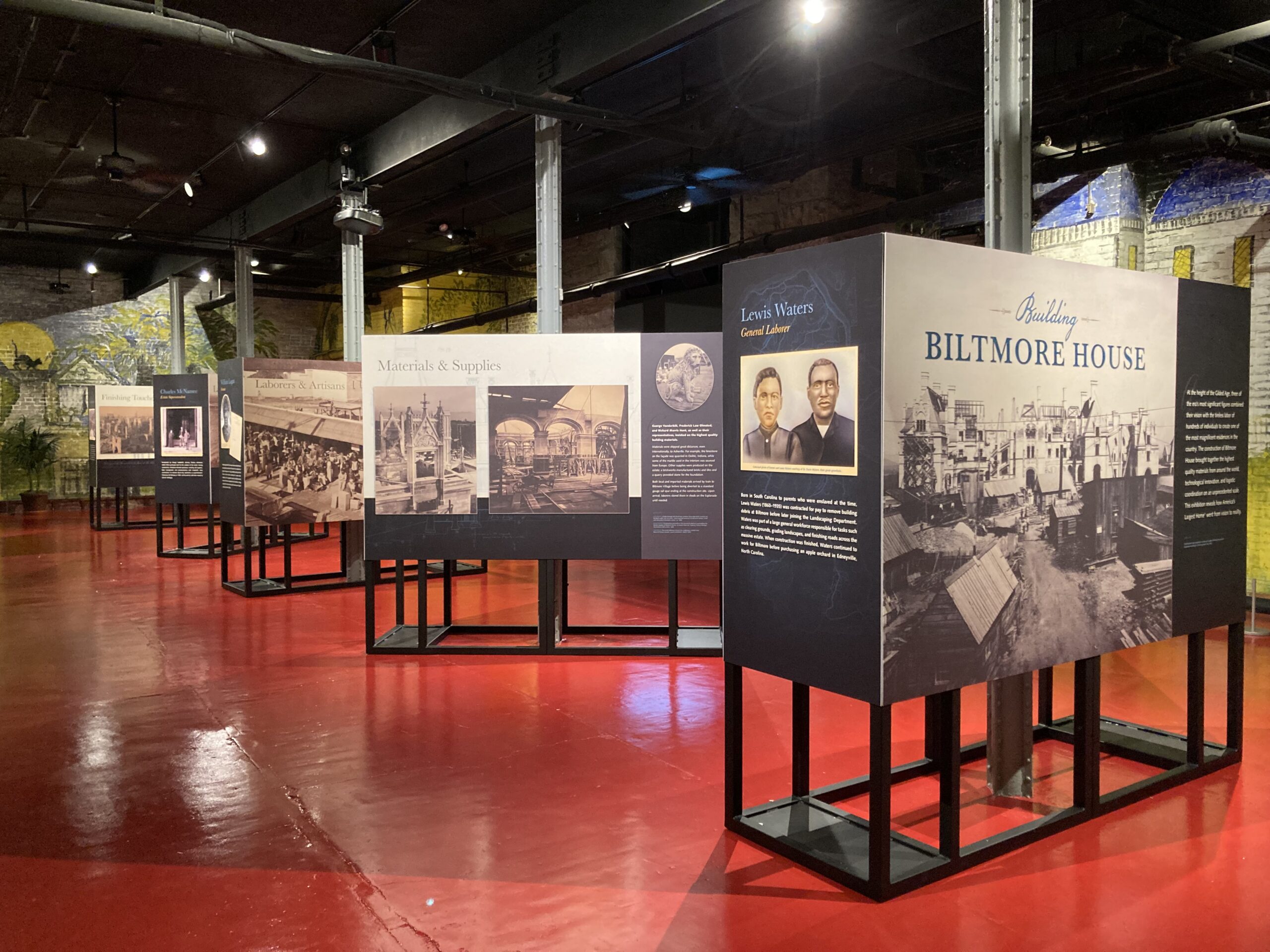
One of the most exciting projects for our team in recent years was the redevelopment of an exhibit on the construction of Biltmore House in the 1890s. A previous version of this exhibit was more focused on the architectural marvel of it all, but in our revised approach, we deliberately chose a more people-focused interpretation that highlighted individuals ranging from laborers to architects and more, including some of the many African-American workers who made up the construction crew. Our team worked directly with descendants of some of these individuals, and since then we have experienced firsthand how impactful it is to have these families’ stories told here, in a place where they made great contributions that aren’t visible unless we make them visible. It is a poignant reminder that Biltmore’s history is not just limited to one family, but that hundreds if not thousands of people who lived or worked here have some sense of ownership and pride in this place. We have had several family reunions that visited the exhibit in the past few years to learn about and celebrate their ancestor’s role and recognition, and that kind of response is so edifying to see.
In order to make that exhibit easily accessible, it is hosted as a digital exhibit on our website in addition to a permanent installation in the Biltmore House basement.
Who is your audience? Does that shape your presentation of this history?
We do not identify our primary audience based on age, background, or other specific demographics. Biltmore has characterized our audience as experience-seekers that look for “wow” moments in their travels. We are very different from other sites because education is not an explicit part of our mission. Our goal instead is to “inspire connections through thought-provoking discovery.” Success for us is not based on how much someone learns here, but on the quality of their experiences and the connections that are made. This definitely informs how we interpret our stories. We provide the opportunity to opt-in to experiences to allow for deeper engagement, but we try not to overwhelm guests with information. We are committed to telling accurate and nuanced stories, but also accept that guests will engage with them on their own terms.
How do you think the GAPE is reflected in our contemporary moment? What can the public learn from your institution/work?
Regardless of the current political or economic climate (which many have called a second Gilded Age), people remain extremely curious about how people lived differently in the past, and even how the 1% live now. Lifestyles of the rich and the famous will always have appeal, and it’s exciting to be in a position to be able to introduce some complexity into that narrative. Many of Biltmore’s guests come to enjoy the aesthetic beauty of this expertly-designed home, meticulous gardens and landscapes, and lavish collection of objects. Beyond the gilded surface, guests at Biltmore hear very relatable human stories about family, personal interests, spending time with friends, staff working for a living, and so much more. While we don’t delve deeply into the historical context through onsite interpretation, I believe that we can help spark an interest in this period of American history and encourage people to learn more beyond their visit to Biltmore. I will always stand by the value of learning about the past to better understand the state of the world in the present, and visiting a site like Biltmore in person can be much more effective on an emotional level than just reading about history as an abstract concept.
Lauren Henry is Curator of Interpretation at Biltmore. She has a B.A. in Anthropology and International Studies from Illinois Wesleyan University and an M.A. in Museum Studies from Johns Hopkins University. She previously worked with the historic collections of the United States Navy, Museum of Modern Art, and various local history museums.
To learn more and ask questions, Lauren invites readers to connect with her by email at lhenry@biltmore.com.


Emily Parrow
A Content Editor for the SHGAPE Blog, Emily Parrow is an independent GAPE scholar with a background in museums and public history. She lives in Rhode Island, where she serves on the Preservation Society of Newport County’s fundraising team. Her M.A. thesis explored the physical and social evolution of nineteenth-century Newport through the eyes of social arbiter Ward McAllister. Most recently, she co-authored an article on President Chester A. Arthur.