
By Dr. Jeannette Eileen Jones
November 11, 2025
The following is a tribute to Lloyd Ambrosius (1941-2024) by Dr. Jeannette Eileen Jones, who will be chairing the panel “Lloyd Ambrosius and His Historical Legacies” at the 2026 meeting of the Organization of American Historians in Philadelphia. The panel, solicited by SHGAPE, reflects upon and commemorates the tremendous accomplishments and broad impact of Lloyd Ambrosius, a leading expert on Woodrow Wilson and Wilsonian statecraft. From his early work on Wilson and the New Left to his later work on Wilson’s religious formation and racism, Lloyd’s research has helped wide audiences understand liberal internationalism. Over the course of his long career, Lloyd amassed a remarkable record of professional leadership, including serving as president of SHGAPE from 2015 to 2017. Panelists include Dr. Kristin Ahlberg, Professor Manfred Berg, Dr. Julia Irwin, and Dr. Ross Kennedy. Find the full details on the April 18th panel here.
Twenty-one years ago, I flew into Lincoln, Nebraska, for my interview for a position as Assistant Professor of History and African American Studies at the University of Nebraska-Lincoln. I had just earned my PhD in June of 2003, and this was my third on-campus interview in 2004.
By way of context, I should note that my first introduction to Lloyd Ambrosius was as an undergraduate at Hofstra University. In my Diplomatic History course, I read Wilson and the American Diplomatic Tradition: The Treaty Fight in Perspective (1987). In my political science foreign relations course, the professor encouraged students to read Wilsonian Statecraft: Theory and Practice of Liberal Internationalism during World War I (1991). When I entered graduate school in 1994, I was already familiar with Lloyd’s scholarship and read several of his articles. So, when the History Department and Institute for Ethnic Studies invited me to campus to give my job talk, I felt both nervous and (strangely) comforted to know that Lloyd would be one of the scholars hearing my presentation.
While I was primarily a U.S. cultural/intellectual historian, my transnational approach to my research was deeply indebted to scholars like Lloyd Ambrosius and my undergraduate mentor/advisor Carolyn “Rusty” Eisenberg who had first introduced me to his work. As I suspected, Lloyd “got” my work during the job talk. He understood my research project (my first book) and my second project (which I am currently finishing). He asked thoughtful and insightful questions and pushed me to think more critically about the diplomatic history embedded in my scholarship. He could see my vision and encouraged me to do the necessary research to make a real intervention into the field.
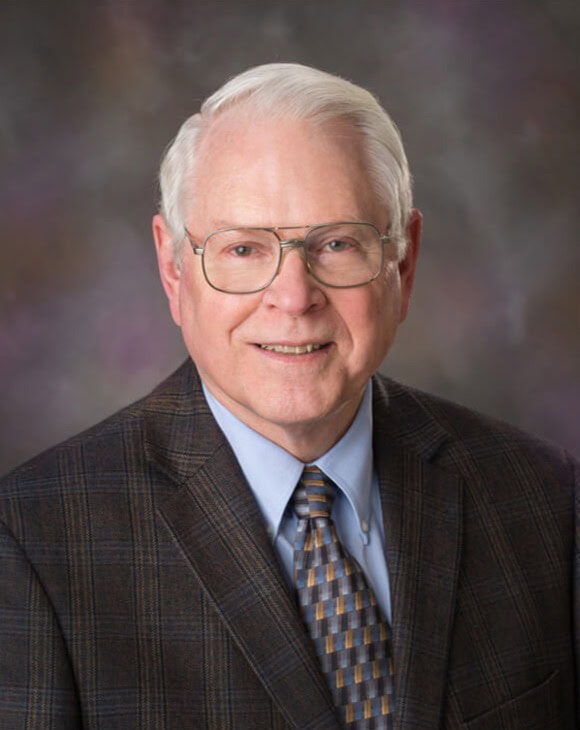
Over the next 20 years, I considered Lloyd to be a mentor. He offered me critical advice during the revising and publication stages of my first book In Brightest Africa (2010), reading portions of the manuscript and pointing to key sources that I had neglected in my narrative. He encouraged me to pursue a post-doctoral fellowship in Germany to complete the book. When I began my second research project in 2011, Lloyd was there again to read my National Endowment for the Humanities collaborative research grant proposal, offering detailed comments of strengthening my overall argument for the significance of my work. When I began working on my second book proposal (America in Africa) in 2018, he again was there to mentor me. He read the proposal and helped me submit it to first-rate publishers in the field. He also discussed the need for me to continue publishing articles in top-tier journals and contributing to edited volumes.
As noted, I considered myself to be a transnational historian, but Lloyd encouraged me to think of myself as both a GAPE historian and a “SHAFR” historian and helped me feel at home in both organizations. Lloyd was active in both organizations and served as President in SHGAPE from 2015 to 2017. I have fond memories running into Lloyd at the airports in Omaha, Lincoln, or DC, discussing the SHGAPE activities at the OAH and AHA conferences, and meeting for lunch or breakfast at the gatherings. I also looked forward to our SHGAPE events at both the OAH and AHA because I knew that I could interact with Lloyd outside of UNL.
Lloyd not only helped me grow as a scholar but also as a teacher. Lloyd and I sat on one MA committee together and he was a reader on my former advisee’s dissertation committee. My interactions with him on these two projects heavily influenced the ways in which I currently approach advising Master’s and doctoral students. First, Lloyd shared his insights with me on how to score comprehensive exams and grade theses and dissertations. We worked together directing a senior thesis and Lloyd agreed to sit on my MA student’s supervisory committee. As a newly tenured junior faculty, I wanted to make sure that I was upholding the ideals of our department, but more importantly, that I was giving constructive feedback that would help my students grow as scholars. Lloyd gave me great advice, and he continued to counsel me on working with students until his retirement. His generosity as a mentor and adviser of students contributed greatly to a tradition of excellence in our department, which he helped establish.
Lloyd provided a model for how senior and junior faculty should interact. He did not demand deference but rather sought to partner and work with faculty to accomplish their career objectives in research, teaching, and service. He served the University of Nebraska-Lincoln well and extensively at the department, college, and university level.
I want to close with reference to a message that Lloyd sent me on April 15, 2021.
Jeannette,
Thanks for a fabulous presentation. I knew you would do a great job and you certainly did!
Lloyd
I can’t remember for the life of me what this was in reference to, but I thank God that Lloyd Ambrosius came into my life. This message from Lloyd, like so many he wrote or said to me in person before, helped me stand confident in my knowledge and expertise as a scholar and historian. He told me in few words (he wasn’t an effusive talker) never to doubt myself and to pursue my academic dreams and claim my spot in the field of U.S. and the World. I will.
I love you, Lloyd. I know that you are with your beloved Marge. May you continue to rest in peace.
Jeannette


Dr. Jeannette Eileen Jones
Jeannette Eileen Jones is a historian of the United States, with expertise in American cultural and intellectual history, African American History and Studies, and Pre-colonial Africa. Her research foci include Gilded Age and Progressive Era America, US and the World, transimperial history, and the transnational history of race and racialization.