
By Emily Parrow
July 14, 2026
In the second installment of “Field Notes: Public History in the GAPE,” Historian Joshua Dubbert, with support from Communications and Marketing Manager Kristina Smith, discusses the Rutherford B. Hayes Presidential Library & Museums. Located in Fremont, Ohio, the organization interprets the life, career, legacy, and times of America’s 19th president, Rutherford B. Hayes. The site offers a variety of public tours and programming throughout the historic Spiegel Grove estate, including special offerings for America’s Semiquincentennial. Dubbert and Smith speak to the site’s unique history and scope, as well as how ongoing research is continuously building a fuller portrait of the Hayes family.
Learn more about the Hayes Presidential at rbhayes.org; on Facebook and Instagram @rbhayespres; and on Bluesky @rbhayespres.bsky.social.
Tell me a bit about your institution’s scope and focus. What makes it unique?
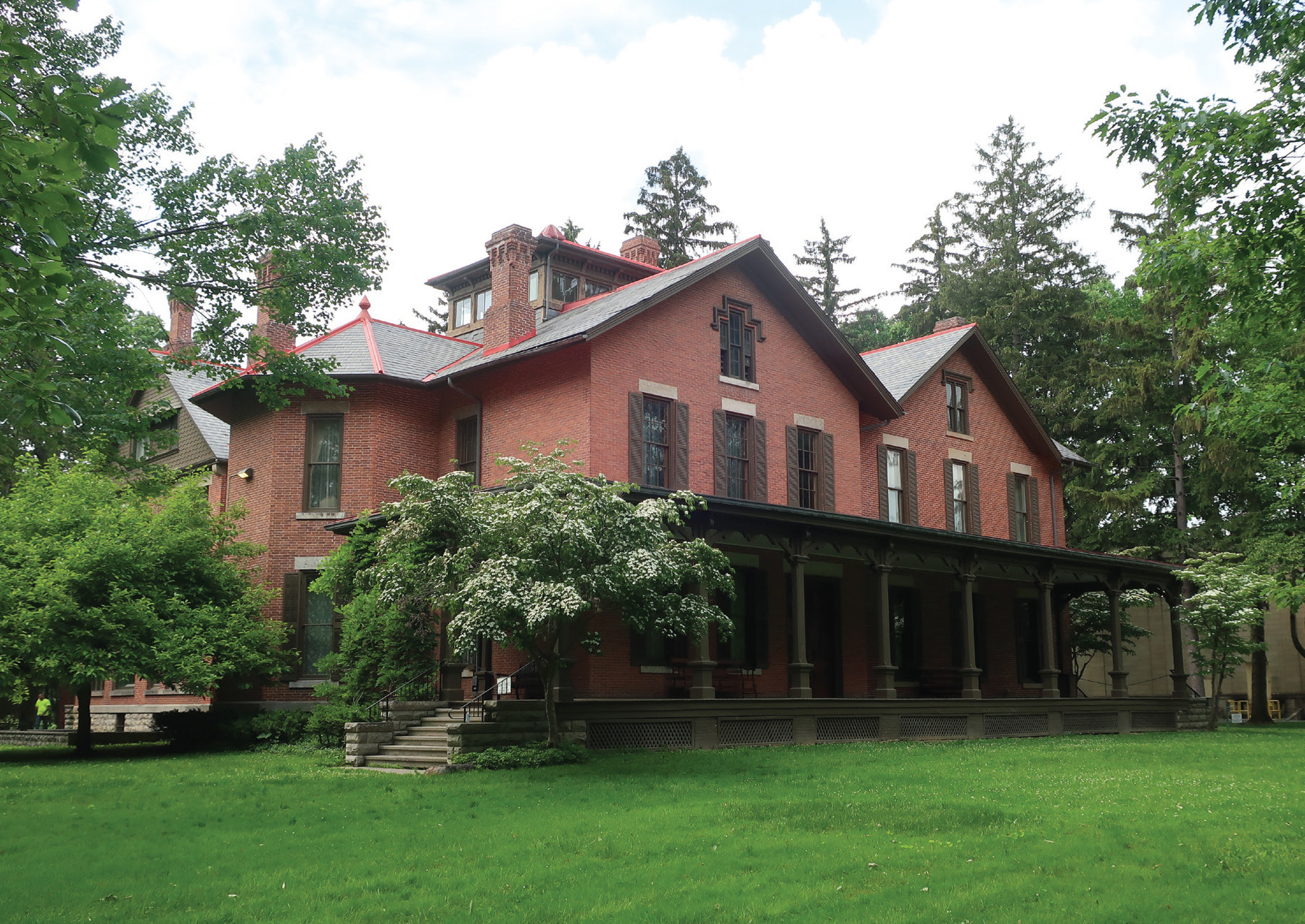
The Rutherford B. Hayes Presidential Library & Museums at Spiegel Grove in Fremont, Ohio, is the nation’s first presidential library. We are not part of the federal system of presidential libraries. At the Hayes Presidential, we interpret Rutherford B. Hayes’ civic, military, and political achievements, as well as his life, his family, and his era. Spiegel Grove consists of the 31-room Hayes Home, a museum, and the presidential library—all situated on 25 acres of scenic grounds (a Level II Arboretum) that are laced with walking trails and serve as the final resting place for the President and First Lady. We provide a range of offerings for the public, from house tours and special events to book clubs and civic services, such as naturalization ceremonies.
How does your institution interpret GAPE history? What tools are you using?
Context is everything. In order to best interpret the President, First Lady, and the six generations that lived at Spiegel Grove from 1863-1966, it is vital to understand the times in which they lived, worked, socialized, and led the nation. This extends from the early Republic, through the Gilded Age, and into the Progressive Era and beyond. With over 22,000 objects and millions of combined documents and books, our rich array of source materials is vital in helping us interpret these stories. Our presidential library is an archival and public research facility known especially for its genealogical resources.
Tell me about your current position. What does a typical day look like for you?
I serve as the site’s Historian and work remotely from Providence, Rhode Island. It is an exciting role, and no two days are the same, which I enjoy! My day typically consists of a lot of reading, writing, library research, meetings, and the occasional research trip. There’s always some new angle to explore! Currently, I have been deep-dive researching the Election of 1876 and its legacy, focusing on interpreting the secondary materials written about it, and combing through the Hayes Presidential’s considerable primary resources on the topic. I’ve also been doing much research with our Education Coordinator, Alina Hart, on Indigenous policy during the Hayes administration. Lastly, Curator of Artifacts Kevin Moore and I are working on a new book on President Hayes, the history of Spiegel Grove, and how it became the first presidential library in the United States.
Can you describe a noteworthy finding, exciting research rabbit trail, encouraging public response, or other insight that occurred through your work?
For America’s 250th, we decided to perform deeper research on President Hayes’ ancestors to learn more about family members who participated in the War for Independence. His great-grandfather, Ezekiel Hayes, was born in Connecticut, where he worked as a blacksmith, served as a captain in the state militia before the war, and in 1780 became Collector for the American Army. The taxes he collected were used to purchase supplies that were carried by oxen to the siege of Yorktown the following year. The drivers who transported the supplies remained to witness the surrender of Cornwallis. While visiting Branford and New Haven, Connecticut, in April of 2026, I worked with Jane Bouley of the Branford Historical Society to determine where Ezekiel and his family lived and whether any related structures were still standing. President Hayes personally visited the two towns—and the sites of his ancestors—in June 1880. It was interesting to walk in his footsteps and find the graves of Ezekiel and other members of the President’s extended family with ties to the founding of the nation. It really helped inform our interpretation on the subject for house and museum tours for the 250th and beyond.
Who is your audience? Does that shape your presentation of this history?
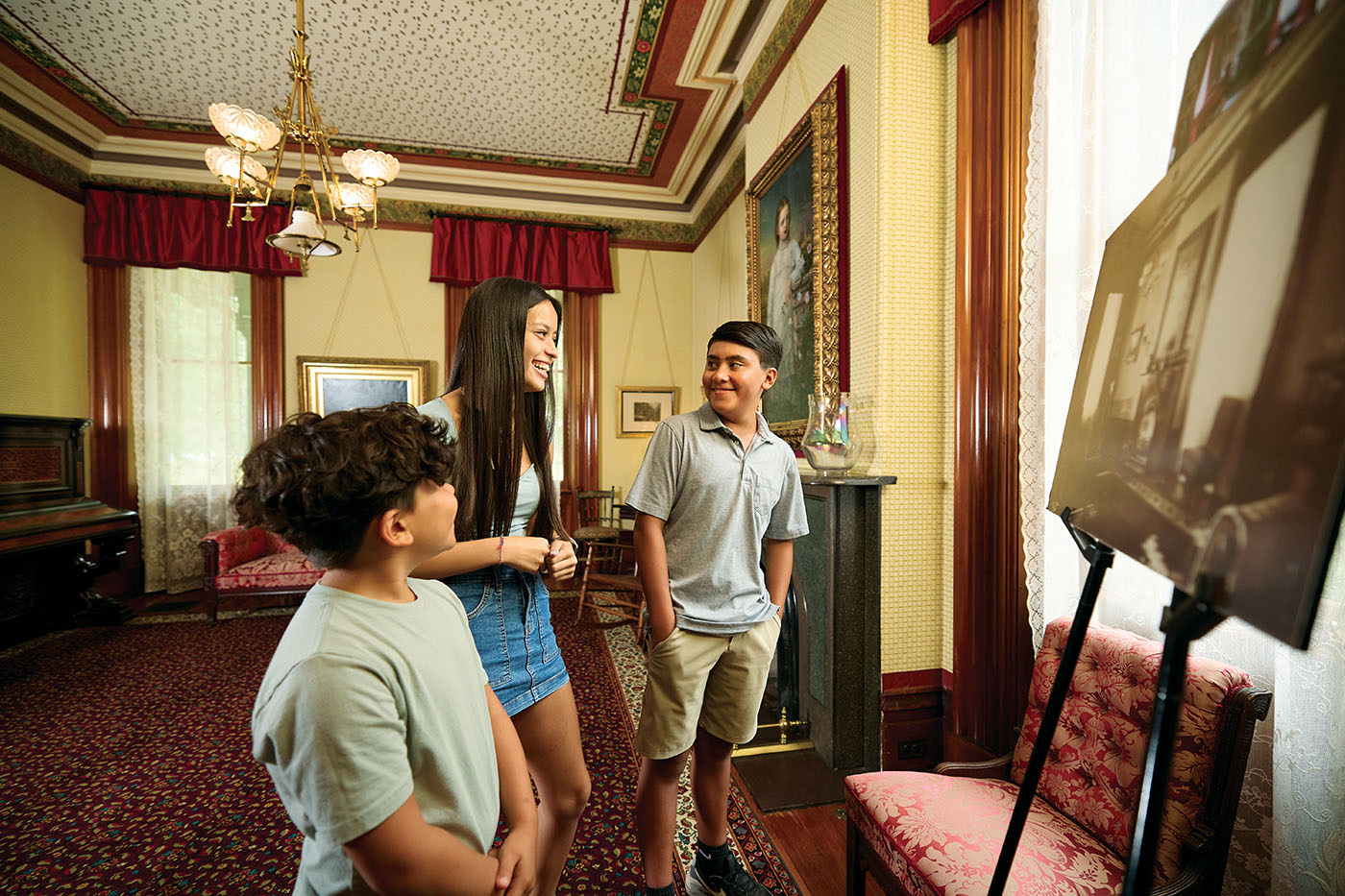
We welcome everyone! We’ve identified a few specific groups that we tend to see regularly: locals within a 50-mile radius who love our events; visitors headed to Ohio’s North Coast to enjoy Lake Erie who love stopping on the way; history enthusiasts who are visiting all the presidential sites and/or are Civil War buffs; grandparents who love bringing their grandchildren; and day trippers from the surrounding region, including Toledo, Detroit, Cleveland, Columbus, and Fort Wayne. Our motto is “Come Curious. Leave Amazed!” Our aim is to offer sound interpretation based on sound scholarly research— to tell the truth, hard histories and all, and let visitors make conclusions for themselves.
How do you think the GAPE is reflected in our contemporary moment? What can the public learn from your institution/work?
We all know that the Gilded Age is very popular at the moment in film and television. Though some productions take pretty big liberties, they help increase the public’s interest in the era and American history in general. At the Hayes Presidential, we provide not only interpretation of the President, First Lady, and their family, but of the 19th Century (in particular the Gilded Age). It is important to frame Rutherford and Lucy’s stories within their social, political, cultural, and economic environment. This can provide context to their decision-making and helps modern visitors reflect on their own places in the wider scope of American history.
Joshua Dubbert serves as Historian of the Rutherford B. Hayes Presidential Library and Museums. His research focuses on Victorian America, particularly its culture, art, architecture, and the era’s presidents. He enjoys sharing the fascinating history of Hayes, his presidency, his family, and his era with the public.
Kristina Smith is the Marketing and Communications Manager for the Rutherford B. Hayes Presidential Library and Museums, where she handles the site’s social media, public and media relations, advertising, and publications, and takes much of its photos and video. She loves working at a site that is not only steeped in history but is an arboretum.


Emily Parrow
A Content Editor for the SHGAPE Blog, Emily Parrow is an independent GAPE scholar with a background in museums and public history. She lives in Rhode Island, where she serves on the Preservation Society of Newport County’s fundraising team. Her M.A. thesis explored the physical and social evolution of nineteenth-century Newport through the eyes of social arbiter Ward McAllister. Most recently, she co-authored an article on President Chester A. Arthur.